









We Tested Multiple Infrared Saunas and Found the One With the Lowest EMF


Infrared saunas promise relaxation and health benefits, but high EMF levels can make some cautious. We tested several popular infrared saunas to find the one with the lowest EMF.
In this guide, we’ll break down what “low EMF” means, why it matters, and show you the safest option for a worry-free sauna experience.
Table of contents
Key Takeaways
You learn what “low EMF” really means and why it matters for your safety.
You see which sauna delivers the lowest EMF after real side-by-side testing.
You understand how low-EMF infrared saunas differ from regular saunas.
You discover how heater types carbon, ceramic, and hybrid impact comfort and EMF levels.
You get clearer on how to choose a sauna that keeps your sessions both effective and low-exposure.

What “Low EMF” Means in Infrared Saunas?
When you choose a low EMF infrared sauna, you are selecting a unit designed to emit minimal electromagnetic fields, usually below 3 milligauss at your seated position.
This is achieved through shielded wiring, properly placed carbon or ceramic heaters, and grounded components.
Independent testing ensures safety, letting you enjoy infrared therapy while reducing potential health concerns from EMF exposure.
Why EMF Exposure Matters in Infrared Saunas?
You should pay attention to EMF exposure in infrared saunas because the electrical components that produce heat also generate electromagnetic fields.
Sitting close to these panels for 30 to 45 minutes can increase your cumulative exposure, potentially causing headaches, fatigue, or brain fog.
Choosing a low-EMF sauna with proper shielding, grounding, and tested panels helps you enjoy the benefits safely and with peace of mind.
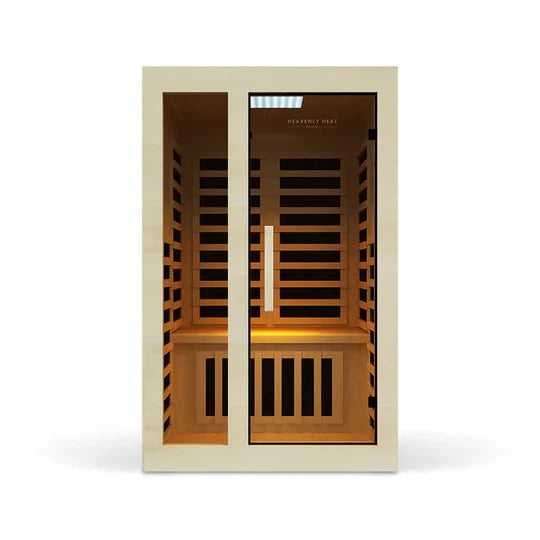
We Tested Multiple Infrared Saunas and Found the One With the Lowest EMF
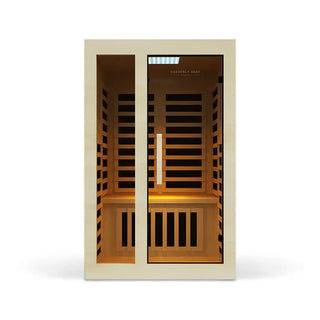
After watching the video, you can clearly see how the Heavenly Heat sauna stands apart when it comes to EMF levels.
When they test it, the electric fields stay around 0–3 volts per meter, even with the heaters and lights on.
Then he moves into another “low-EMF” sauna, and suddenly the readings shoot up, 50 volts per meter in the middle, spiking much higher near the bench and heaters.
The magnetic fields also jump to 40–80 milligauss, which is far from low. Finally, in the so-called “ultra-low EMF” sauna, the numbers get even worse, climbing past 400–650 volts per meter near the heaters.
After seeing all three back-to-back, you realize Heavenly Heat easily delivers the lowest EMF experience.
How Low-EMF Infrared Saunas Are Different from Regular Saunas?
Low-EMF infrared saunas differ from regular saunas in how they heat your body, their temperature, and EMF exposure.
They use infrared light to warm you directly at lower temperatures, allowing longer sessions, while traditional saunas heat the air to higher temperatures for shorter, intense sessions.
Low-EMF models have shielded wiring to reduce electromagnetic fields, giving you a safer, more comfortable sauna experience.
Types of Heaters Used in Low-EMF Infrared Saunas
Low-EMF infrared saunas typically use carbon fiber, ceramic, or hybrid carbon-ceramic heaters, and each material affects heat quality, energy use, and safety in different ways.
Carbon fiber heaters are the most popular because they deliver smooth, even heat across large panels, which helps warm the body deeply at lower temperatures while keeping EMF levels extremely low.
They’re also highly durable and energy-efficient, making sessions more comfortable and cost-effective.
Ceramic heaters heat up faster and feel more intense, but they create concentrated “hot spots,” run at higher EMF levels, and are more fragile.
Hybrid carbon-ceramic heaters blend the strengths of both, offering quicker warm-up with more even coverage, and some advanced designs can achieve near-zero EMF output.
Studies and manufacturer data show that infrared heaters convert most of their electricity directly into radiant heat, with longer far-infrared wavelengths, typical of carbon panels, being absorbed more effectively by the body.
Overall, heater type influences how evenly warmth is delivered, how much energy the sauna uses, and how comfortable and safe each session feels.

Ryan "The Sauna Guy"
Ryan has been using and writing about saunas extensively since 2019.


